Menu
Your Cart
NOTICE: We have Fully discontinued physical walk-in customer service, RFQ, and LPO processing. Nerokas is now a FULLY DIGITAL ONLINE STORE, and our virtual assistant, Ginō AI, is here to help you navigate and checkout. Just ADD your Items to cart and type CHECKOUT on Ginō. Please note that corporate customers must register a corporate account to ensure proper Digital eTIMS/VAT processing.

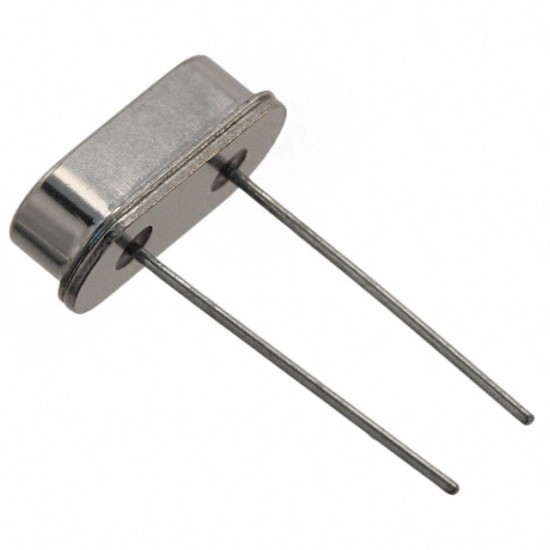
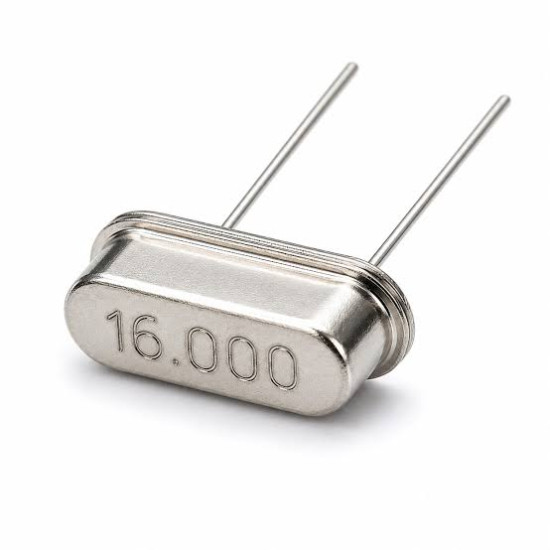
CRYSTAL 16 MHZ HC-49s

CRYSTAL 16 MHZ HC-49s
Top Seller
CRYSTAL 16 MHZ HC-49s
KES 20.00
  • Stock: In Stock
  • Model: 16MHz
  • Weight: 0.58g
  • Dimensions: 11.05mm x 4.65mm x 16.08mm
  • SKU: 193

Comprehensive Architectural Overview of Quartz Crystal Resonators

The MEC 16.0000 MHz HC-49S quartz crystal resonator represents a fundamental building block in modern digital timing, frequency synthesis, and clock generation architectures. Operating at a fundamental vibration mode frequency of 16.0000 MHz, this passive electromechanical component relies on the inverse piezoelectric effect inherent to high-purity synthetic single-crystal silicon dioxide (SiO2). When an alternating electric field is applied across the metalized electrode contacts deposited onto the precisely cut quartz wafer, mechanical deformation occurs at an exceptionally stable, predictable resonant frequency. The HC-49S package variant is an industry-standard low-profile through-hole metal-can enclosure designed to offer superior electromagnetic shielding, high mechanical durability, and minimal structural footprint on printed circuit boards (PCBs).

Precision timing is critical across digital systems to prevent bit slip, synchronize data buses, manage frame timing in communication protocols, and drive phase-locked loops (PLLs). The MEC 16.0000 MHz crystal provides a baseline frequency tolerance of ±20 ppm (parts per million) at 25 degrees Celsius, making it suitable for applications ranging from basic 8-bit microcontrollers to complex real-time embedded systems, wireless transceivers, and high-speed USB controllers. The AT-cut quartz crystal blank inside the HC-49S package ensures a highly favorable frequency-vs-temperature parabolic curve, minimizing thermal frequency drift across standard commercial and industrial operational temperature ranges.

Electromechanical Specifications and the Butterworth-Van Dyke Model

To analyze the behavioral dynamics of the MEC 16.0000 MHz crystal resonator within an active circuit, design engineers rely on the Butterworth-Van Dyke (BVD) equivalent circuit model. The electrical characteristics of this component consist of a motional branch containing motional inductance (L1), motional capacitance (C1), and motional resistance (R1, commonly referred to as Equivalent Series Resistance or ESR), connected in parallel with a static or shunt capacitance (C0). For this 16.0000 MHz HC-49S crystal, the ESR is tightly controlled to a maximum of 30 to 40 Ohms, enabling rapid startup oscillation and low power consumption within drive circuits.

The specified load capacitance (CL) for this crystal is 18 pF. The load capacitance represents the total effective capacitance presented to the crystal terminals by the external oscillator circuit, including PCB stray capacitance and input/output capacitance of the active driving IC. Operating the crystal with an external load capacitance that matches the specified 18 pF value guarantees that the system oscillates precisely at the nominal 16.0000 MHz frequency. Deviations in load capacitance will cause frequency pulling, shifting the actual output frequency higher (if CL is lower than specified) or lower (if CL is higher than specified).

Pierce Oscillator Circuit Topology and Capacitor Calculations

The standard topology used to drive the MEC 16.0000 MHz HC-49S crystal is the active Pierce Oscillator circuit, typically embedded within microcontrollers and application-specific integrated circuits (ASICs). A Pierce oscillator consists of an internal inverting amplifier (such as a CMOS inverter), a high-value feedback resistor (Rf, typically 1 Mohm to 10 Mohms) connected across the inverter to bias it in its linear region, a drive-limiting resistor (Rs), and two external load capacitors (C1 and C2) tied from each crystal lead to signal ground.

To calculate the required values for external load capacitors C1 and C2 to achieve the target 18 pF load capacitance, engineers utilize the load capacitance equation: CL = (C1 * C2) / (C1 + C2) + Cs, where Cs is the parasitic stray capacitance of the PCB traces and IC pins (typically 2 pF to 5 pF). Assuming symmetric capacitors (C1 = C2 = Cext) and a typical stray capacitance Cs of 4 pF, the equation simplifies to: 18 pF = (Cext / 2) + 4 pF. Subtracting 4 pF yields 14 pF = Cext / 2, resulting in a required target value of Cext = 28 pF. Choosing standard surface-mount ceramic capacitor values of 27 pF or 30 pF provides an ideal capacitance match for reliable, sub-ppm frequency accuracy.

Physical Package Dynamics and Grounding Mechanics

The HC-49S package represents a compressed, low-profile iteration of the legacy HC-49/U through-hole package. With a body height of just 3.68 mm, the HC-49S significantly reduces vertical clearance requirements, allowing low-profile embedded systems to be stacked or housed in compact enclosures. The hermetically sealed resistance-welded metal can isolates the internal quartz wafer from atmospheric humidity, reactive contaminants, and mechanical oxidation, thereby preserving long-term frequency stability and extending component lifespan (aging rate under ±3 ppm per year).

The lead frame features two parallel through-hole pins with a standard pitch of 4.88 mm. While the crystal operation is non-polarized, the metallic outer case can act as a floating antenna if ungrounded. In high-noise environments or radiation-sensitive applications, soldering a dedicated ground wire from the top of the HC-49S metal body to the system ground plane provides effective Faraday cage shielding, suppressing radiated electromagnetic interference (EMI) and improving immunity against localized electrostatic discharge (ESD) events.

Application Use-Case


1: Microchip ATmega328P Microcontroller System Clocking

In classical embedded platforms such as the Arduino Uno or custom ATmega328P control boards, the MEC 16.0000 MHz HC-49S crystal serves as the primary external system clock source. Microchip ATmega328P pin 9 (XTAL1/TOSC1) functions as the input to the internal inverting amplifier, while pin 10 (XTAL2/TOSC2) serves as the amplifier output. Terminal 1 of the HC-49S crystal connects directly to XTAL1 (Pin 9), and Terminal 2 connects to XTAL2 (Pin 10). A 22 pF ceramic capacitor connects Pin 9 to GND, and a second 22 pF ceramic capacitor connects Pin 10 to GND. Configuring the ATmega328P High-Fuse and Low-Fuse bits for a Full Swing Crystal Oscillator (Low Fuse: 0x77) ensures high noise immunity and stable fundamental oscillation at 16.0000 MHz, providing execution timing accuracy of 62.5 nanoseconds per instruction cycle.

2: STM32 ARM Cortex-M High-Speed External (HSE) Oscillator

High-performance 32-bit microcontrollers such as the STM32F4 series rely on the High-Speed External (HSE) clock input to feed their internal Phase-Locked Loops (PLLs). The MEC 16.0000 MHz crystal connects to pin PH0-OSC_IN (Pin 12 on LQFP100) and pin PH1-OSC_OUT (Pin 13 on LQFP100). Terminal 1 of the HC-49S crystal attaches to OSC_IN, and Terminal 2 connects to OSC_OUT. Two 20 pF low-ESR NP0/C0G ceramic capacitors are placed as close as possible to the pins, terminating to a solid ground plane. Once initialized in firmware by setting the HSEON bit in the RCC_CR register, the STM32 internal PLL multiplies the 16 MHz base frequency up to 168 MHz or higher, providing jitter-free execution for real-time digital signal processing.

3: USB 2.0 Full-Speed Physical Layer Clocking (PIC18F4550)

Universal Serial Bus (USB) 2.0 Full-Speed architecture demands accurate clock generation with absolute tolerances under ±0.25% (2500 ppm). The Microchip PIC18F4550 microcontroller uses the MEC 16.0000 MHz crystal to generate the required 48 MHz USB clock via an internal primary prescaler and PLL module. Connect Pin 1 of the HC-49S crystal to OSC1/CLKI (Pin 13) and Pin 2 to OSC2/CLKO/RA6 (Pin 14). Load capacitors of 22 pF ground both sides of the crystal. Within the configuration fuses (CONFIG1L), the primary oscillator prescaler is set to divide by 4 (16 MHz / 4 = 4 MHz input to the 96 MHz PLL), which subsequently divides by 2 to yield an exact, low-jitter 48.000 MHz USB clock source.

4: CAN Bus Controller Timing (MCP2515 Standalone CAN Controller)

Controller Area Network (CAN) protocol execution relies on deterministic bit-timing logic across distributed automotive and industrial nodes. The MCP2515 standalone CAN controller requires a highly stable crystal reference to avoid bit phase errors. Connect Pin 1 of the MEC 16 MHz crystal to MCP2515 OSC1 (Pin 9) and Pin 2 to OSC2 (Pin 8). Dual 22 pF loading capacitors connect each terminal to signal ground. The 16.0000 MHz baseline clock enables the internal bit time logic to configure precisely calculated Time Quanta (TQ) segments, allowing reliable 500 kbps or 1 Mbps CAN communication over noisy differential bus lines.

5: Standalone Ethernet Controller Hardware Clocking (ENC28J60)

The Microchip ENC28J60 SPI-to-Ethernet bridge requires a 25 MHz or 16 MHz reference depending on configuration modes. In 16 MHz clock modes, the MEC 16.0000 MHz HC-49S crystal connects directly across OSC1 (Pin 9) and OSC2 (Pin 10). Place a 18 pF capacitor between Pin 9 and GND, and a 18 pF capacitor between Pin 10 and GND. The crystal provides the clock reference for the physical layer (PHY) preamble generation, Manchester encoding/decoding, and Media Access Control (MAC) packet timing layers, ensuring error-free frame transmission over 10BASE-T media.

6: FPGA Global Clock Buffer Driver Architecture

FPGAs such as AMD/Xilinx Spartan-7 or Intel Cyclone platforms utilize the 16.0000 MHz crystal as an external master system reference. Because FPGA clock inputs typically expect a square-wave logic signal, the HC-49S crystal is combined with an external single-inverter IC (such as a 74AHC1GU04). The crystal is placed across the input and output pins of the inverter with a 1 Mohm feedback resistor, and the output is fed directly to a dedicated FPGA Global Clock Input pin (MRCC/SRCC pin). This configuration provides a ultra-stable 16.0000 MHz system clock that drives internal Digital Clock Managers (DCM) or Phase-Locked Loops (PLLs) to synthesize internal logic clock networks up to hundreds of megahertz.

7: RF Transceiver Phase-Locked Loop Reference (Semtech SX1276 LoRa)

Long-range RF communication protocols such as LoRa rely on accurate crystal references to prevent carrier frequency drift that can lead to packet loss. The Semtech SX1276 transceiver connects the MEC 16.0000 MHz crystal across its XTA (Pin 5) and XTB (Pin 6) terminals. Precision 15 pF ceramic capacitors are connected from XTA to GND and XTB to GND. The 16.0000 MHz fundamental frequency acts as the phase detector input for the RF synthesizer, enabling sub-gigahertz carrier frequency generation (e.g., 868 MHz or 915 MHz) with absolute carrier stability across long-distance wireless links.

8: High-Speed UART Baud Rate Generator (FTDI FT232RL)

The FTDI FT232RL USB-to-Serial UART interface chip requires an accurate clock reference to eliminate framing errors at high baud rates (such as 115200 baud up to 3 Mbps). Connect Pin 1 of the MEC 16 MHz HC-49S crystal to FT232RL pin OSCI (Pin 27) and Pin 2 to OSCO (Pin 28). Place 27 pF load capacitors from Pin 27 to GND and Pin 28 to GND. The 16.0000 MHz oscillator reference guarantees that the fractional baud rate generator produces accurate timing sampling windows, ensuring absolute zero bit error rates during heavy bidirectional serial data transmission.

Ginō Ginō AI - Nerokas AI Assistant
✕
Jambo! I am Ginō, a Nerokas AI Assistant and Africa's best Open Hardware Facilitator AI agent here to help. In order to serve you better and to help me give you accurate shipping estimates as we begin, could you please tell me your name and your location/city?

You can also ask about any hardware or type I'd like to order, I am looking for..., you can also LIST all SKUs & Quantity of desired items from our website here for me to help you Checkout automatically at anytime to fast-track your requests and orders.