Menu
Your Cart
NOTICE: We have Fully discontinued physical walk-in customer service, RFQ, and LPO processing. Nerokas is now a FULLY DIGITAL ONLINE STORE, and our virtual assistant, Ginō AI, is here to help you navigate and checkout. Just ADD your Items to cart and type CHECKOUT on Ginō. Please note that corporate customers must register a corporate account to ensure proper Digital eTIMS/VAT processing.

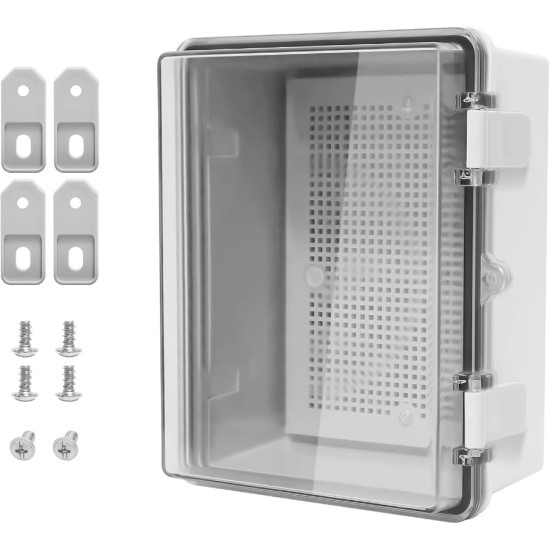
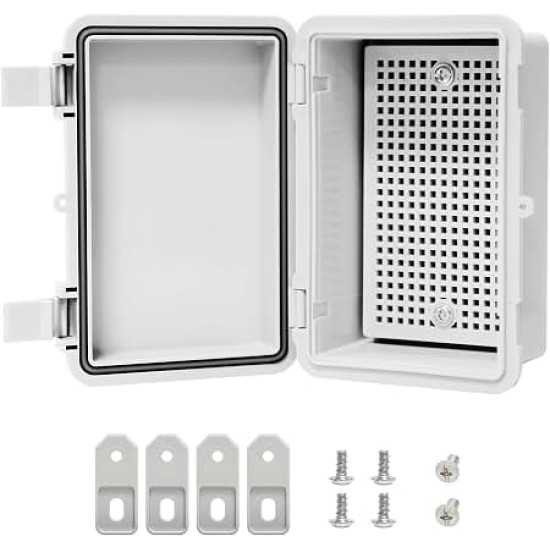
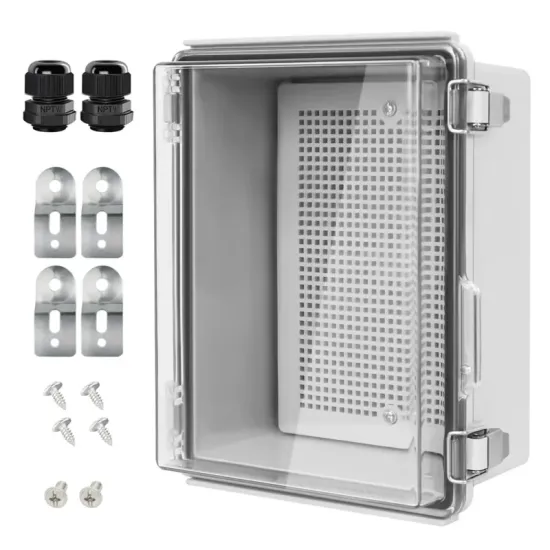
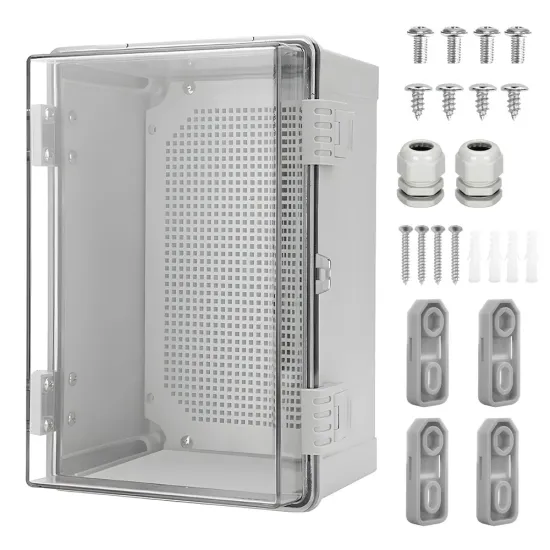
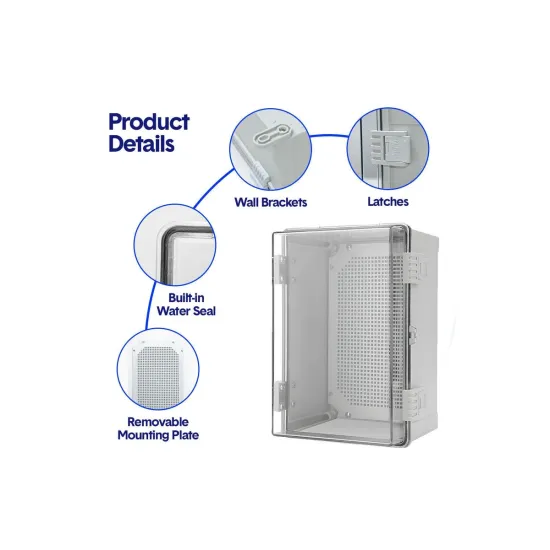
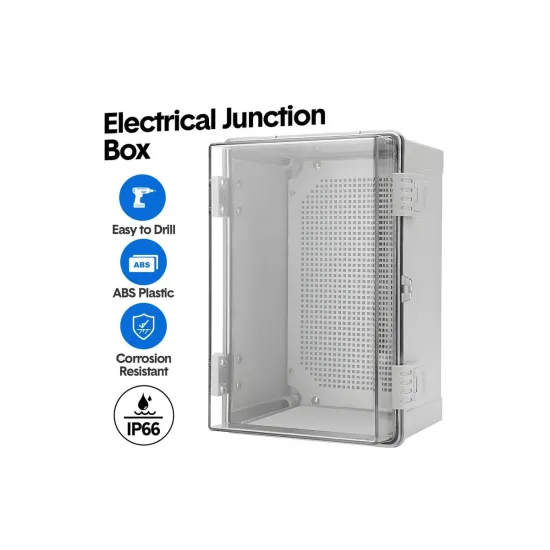
IP65 ABS Waterproof Junction Box with Transparent Lid (150x100x70mm)

IP65 ABS Waterproof Junction Box with Transparent Lid (150x100x70mm)
KES 1,200.00
  • Stock: In Stock
  • Model: IP65 Waterproof Enclosure 150x110x70mm
  • Weight: 265.00g
  • Dimensions: 150.00mm x 110.00mm x 70.00mm
  • SKU: 3229

Comprehensive Engineering Overview

The 150 x 100 x 70 mm IP65 Weatherproof ABS Junction Box is engineered as a high-durability baseline solution for housing sensitive electronic assemblies, terminal blocks, printed circuit boards, and industrial control interfaces in severe operational environments. Designed to bridge the gap between fragile indoor electronics and unpredictable field conditions, this modular project enclosure features an optimized geometric form factor designed for maximum internal volume utilization without sacrificing external structural strength. The base unit is injection-molded from high-grade Acrylonitrile Butadiene Styrene plastic, providing exceptional structural rigidity, superior impact resistance, and inherent dielectric insulation. Accompanied by a transparent hinged polycarbonate cover, this enclosure permits continuous optical auditing of status LEDs, digital segment displays, voltage meters, and internal wiring topologies without disturbing the ingress-resistant micro-environment created inside the sealed housing.

Material Science and Structural Integrity

The mechanical shell of this enclosure is manufactured utilizing an engineered ABS formulation that yields a balanced combination of mechanical, thermal, and chemical resilience. Acrylonitrile provides chemical resistance to acids, alkalis, and inorganic salts, while Butadiene imparts high impact strength and fracture toughness even at sub-zero temperatures down to -20 degrees Celsius. Styrene provides a smooth, rigid surface finish with low hygroscopic absorption characteristics, ensuring the structural shell does not warp, swell, or degrade when subjected to persistent humidity. Complementing the opaque base, the hinged lid is formed from optical-grade Polycarbonate, celebrated for its high tensile strength of 60 to 70 MPa and extraordinary impact resilience. The composite assembly resists structural creep under continuous static compression, preserving internal standoff dimensions and external mounting alignments over long deployment lifecycles.

IP65 Ingress Protection and Sealing Dynamics

Certified to IEC 60529 IP65 standards, this project box delivers total dust tightness alongside robust defense against low-pressure water jets from any angle. Ingress protection is achieved through a precision-engineered tongue-and-groove sealing channel built around the upper perimeter of the base module. Nested within this channel is a continuous, high-elasticity poured silicone gasket that forms a hermetic barrier under continuous compressive load. The hinged top cover is drawn tightly into the base via robust plastic latching mechanisms, maintaining equalized sealing pressure around the full structural perimeter. The IP65 rating guarantees that fine particulate matter, ambient moisture, condensation, wind-driven rain, and splashed liquids are completely prevented from contaminating sensitive internal logic boards, power supplies, or physical interconnects.

Optical Dynamics and Hinge Mechanism Design

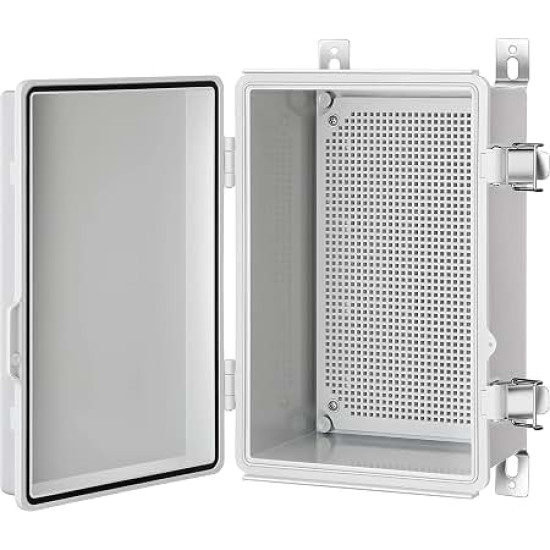
A key structural advantage of this enclosure model is the integrated transparent hinged cover. Molded with optical clarity approaching 89 percent light transmission, the window facilitates effortless inspection of internal diagnostic displays, status indication lamps, relay contacts, and internal labeling. The integrated structural hinge mechanism utilizes non-corrosive pin geometry that eliminates the risk of hardware binding, rust, or joint fatigue caused by repetitive opening during routine maintenance. The hinged lid features a secure quick-release snap latch, allowing field technicians fast, tool-free access to internal components without the risk of dropping or losing tiny external assembly screws in field settings.

Internal Mounting Geometry and Mechanical Grid

The interior architecture of the base features an array of pre-molded M3 brass-threaded inserts and structural plastic standoffs positioned on a normalized mounting grid. These internal mounting posts sit 5 mm off the bottom interior plane, elevating sub-assemblies away from the floor of the housing and allowing optimal under-board clearance for surface-mount components, pin headers, and structural solder joints. The internal dimensions easily accommodate standard DIN rail segments, custom multi-layer PCBs, solid-state relay blocks, and step-down transformer modules. External wall thickness is maintained at a robust 3.0 mm, providing structural mass capable of supporting direct drilling for cable glands, conduit fittings, or external interface switches without fracturing the surrounding material.

Thermal Profile and Chemical Compatibility

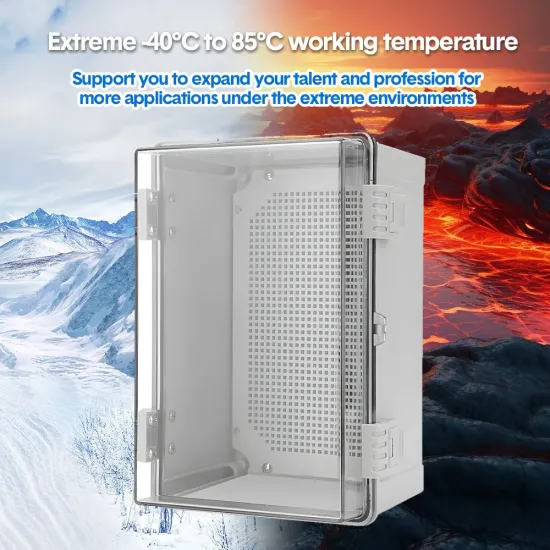
Engineered for broad environmental applicability, this project enclosure maintains structural stability across a continuous operating thermal envelope ranging from -20 degrees Celsius to +80 degrees Celsius. The ABS body exhibits a heat deflection temperature of 95 degrees Celsius at 0.45 MPa, preventing thermal deformation under direct sunlight exposure or near heat-generating industrial equipment. The insulating properties of the synthetic polymer prevent accidental electrical flashovers to ground, making it an ideal choice for housing high-voltage relay switching or mains-level AC distribution modules. The enclosure exhibits high resistance to industrial alcohols, hydraulic fluids, weak acids, and alkaline solutions, though exposure to strong aromatic hydrocarbons and ketones should be avoided to preserve plastic surface integrity.

Cable Entry Management and Modification Guidance

While the perimeter walls of the enclosure arrive un-drilled to afford complete customizability, the uniform wall profile is optimized for standard step-drill bits, hole saws, and CNC machining centers. Users can effortlessly install PG7, PG9, PG11, PG13.5, or PG16 liquid-tight cable glands, as well as M12 or M16 metric strain-relief fittings. When drilling cable entry holes, maintaining a minimum spacing of 8 mm between adjacent pass-through holes ensures structural rigidity is preserved around the gasket sealing zones. Installing IP68-rated cable glands with rubber compression seals ensures the total rating of the modified enclosure does not fall below the base IP65 baseline.

Application Use-Cases

1: Solar Photovoltaic String Monitoring Junction

In off-grid and utility-scale solar arrays, monitoring individual string voltages and currents is critical for array optimization. This enclosure acts as a weather-sealed field junction housing a micro-controller circuit, current sensing transformers, and a high-voltage divider circuit. Solar panel DC positive and negative lines pass through PG9 cable glands into a DIN-rail mounted 4-point screw terminal block. Pin 1 connects to PV Array Positive, Pin 2 to PV Array Negative, Pin 3 to Hall-Effect Sensor Signal Output, and Pin 4 to Logic Ground. The transparent hinged lid enables quick visual confirmation of diagnostic status LEDs on the internal sensing board without exposing high-voltage DC terminals to ambient rain or moisture.

2: Outdoor LoRaWAN IoT Environmental Gateway Node

For smart agricultural applications, this box serves as the core node housing an ESP32 or STM32 MCU, a LoRa transceiving module, a step-down buck converter, and a lithium iron phosphate battery backup. Sensor inputs from soil moisture probes, ambient temperature sensors, and humidity transducers route through sealed M12 connectors on the bottom wall. The pinout architecture inside the box uses a central terminal block: Terminal 1 (VCC 12V Main), Terminal 2 (GND), Terminal 3 (RS-485 A), Terminal 4 (RS-485 B), Terminal 5 (3.3V Sensor Power Out), and Terminal 6 (Analog Data Input). The clear lid allows farmers and technicians to observe signal transmission status indicators, battery charge states, and system error codes at a glance.

3: Industrial Motor Starter and Remote Contactor Module

In industrial automation environments where spatial constraints require localized control near heavy machinery, this enclosure houses an AC contactor, thermal overload relay, and remote control logic interface. High-voltage 3-phase AC power enters via PG13.5 glands on the top face, wiring into a heavy-duty terminal block with Pin L1 (Phase A Input), Pin L2 (Phase B Input), Pin L3 (Phase C Input), and Pin PE (Protective Earth). Auxiliary low-voltage control lines link to a 24V DC relay control terminal block: Terminal A1 (24V Coil Input), Terminal A2 (Coil Return), Terminal 13 (NO Contact Status), and Terminal 14 (NO Contact Return). The hinged polycarbonate lid provides mechanical protection while permitting safety inspectors to visually verify contactor position and thermal trip flags.

4: Aquatic and HVAC Pump/Fan Controller

Used extensively in commercial pool systems and HVAC cooling towers, this setup houses a dual-channel relay board and a programmable digital timer display module. Mains 120V/240V AC power feeds into an internal terminal strip: Pin 1 (Line In), Pin 2 (Neutral In), Pin 3 (Earth Ground), Pin 4 (Switched Pump Out), and Pin 5 (Switched Solenoid Valve Out). Low-voltage control inputs tie to a 5-pin sensor terminal block: Pin V+ (5V), Pin S1 (Flow Switch Signal), Pin S2 (Temperature Probe Signal), Pin S3 (High Level Float), and Pin GND. The optical clarity of the cover plate allows personnel to read real-time temperature and flow rate numbers on the digital module without breaking the humidity seal.

5: Outdoor RS-485 Modbus Relay Controller Box

In distributed building automation systems, local control over field actuators requires decentralized relay nodes. Mounted inside this housing is a 4-channel Modbus RTU relay board powered by 24V DC. Bus cables pass through liquid-tight cable glands to a 3-pin RS-485 communication terminal block: Pin Data+ (A), Pin Data- (B), and Pin Shield/GND. Output relay terminals are arranged on a 12-position screw block representing Form C relay channels: Pins 1-3 (Relay 1 NO/COM/NC), Pins 4-6 (Relay 2 NO/COM/NC), Pins 7-9 (Relay 3 NO/COM/NC), and Pins 10-12 (Relay 4 NO/COM/NC). The hinged clear cover allows maintenance teams to rapidly troubleshoot network activity LEDs and verify relay latch status.

6: Power-over-Ethernet (PoE) Outdoor Security Hub

For perimeter security camera networks, this enclosure houses a compact active PoE splitter, an inline surge suppressor, and a fiber-to-Ethernet media converter. A single cat6 cable carrying PoE+ (802.3at) enters through an IP67 RJ45 pass-through gland. Inside the enclosure, power is broken out into a terminal connector: Pin 1 (12V DC Output Positive), Pin 2 (12V DC Ground), Pin 3 (Ethernet RX+), Pin 4 (Ethernet RX-), Pin 5 (Ethernet TX+), and Pin 6 (Ethernet TX-). Auxiliary 12V power is directed to local infrared illuminators and heating elements. Visual monitoring of optical link speed, Ethernet activity, and power supply health is performed directly through the clear cover window.

7: Off-Grid Battery Charge Controller Subsystem

Designed for remote telecommunication sites, this enclosure protects an MPPT charge controller module managing small 12V/24V solar power systems. Connections are handled by an internal high-current barrier strip: Terminal 1 (Solar Panel +), Terminal 2 (Solar Panel -), Terminal 3 (Battery +), Terminal 4 (Battery -), Terminal 5 (Load +), and Terminal 6 (Load -). An internal digital LCD display module is aligned directly beneath the polycarbonate cover. This layout permits field technicians to audit charge state, battery voltage, solar input wattage, and thermal readings without opening the enclosure, ensuring that sand, dust, and coastal salt fog cannot penetrate the electronics compartment.

8: Automated Agricultural Irrigation Solenoid Driver

In commercial greenhouse and field irrigation systems, localized solenoid driver circuits require weatherproof housing to withstand direct spray and dirt contamination. The enclosure houses a multi-channel solenoid driver board linked to an RF transceiver board. Main power and input logic connect to a 4-wire terminal block: Terminal 1 (24V AC Valve Power Input), Terminal 2 (24V AC Return), Terminal 3 (RF Signal Line), and Terminal 4 (Logic Ground). The driver outputs link to an 8-position solenoid terminal bar: Terminals 1 through 6 (Solenoid Zones 1-6 Drivers), Terminal 7 (Master Valve Output), and Terminal 8 (Common Return). Technicians utilize the transparent hinged cover to quickly verify solenoid zone triggering LEDs during cycle tests without risking water entry during active irrigation cycles.

Ginō Ginō AI - Nerokas AI Assistant
✕
Jambo! I am Ginō, a Nerokas AI Assistant and Africa's best Open Hardware Facilitator AI agent here to help. In order to serve you better and to help me give you accurate shipping estimates as we begin, could you please tell me your name and your location/city?

You can also ask about any hardware or type I'd like to order, I am looking for..., you can also LIST all SKUs & Quantity of desired items from our website here for me to help you Checkout automatically at anytime to fast-track your requests and orders.