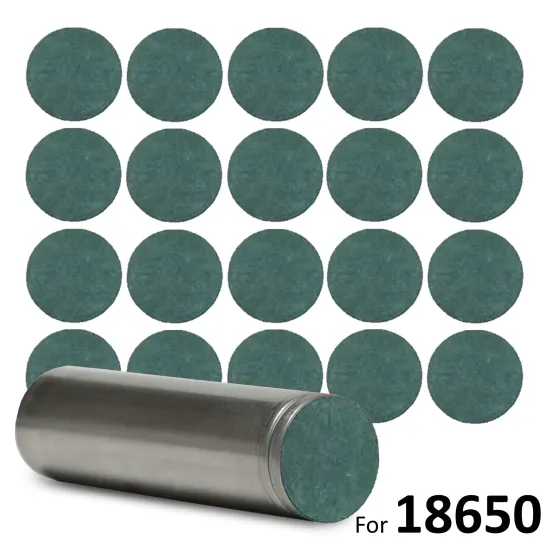
- Stock: In Stock
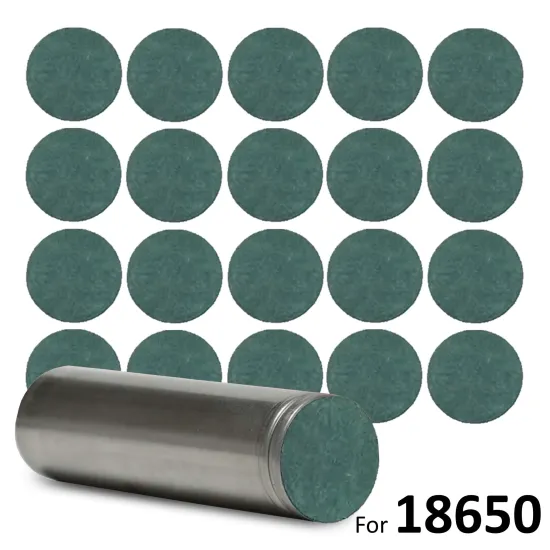
- Model: 18650 Solid Battery Insulation
- Weight: 0.20
- Dimensions: 18.00 x 18.00 x 0.30
- SKU: 3421
Comprehensive Product Overview and Material Science
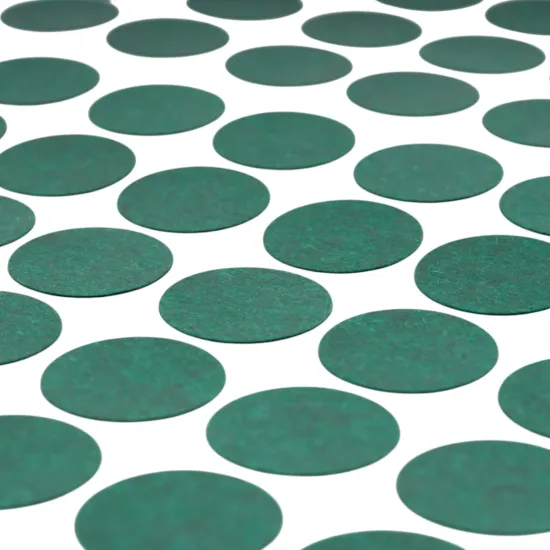
The 18650 Solid Electrical Insulation Gasket is an indispensable high-reliability safety barrier specifically engineered for custom lithium-ion battery pack configuration and manufacturing. Fabricated from premium-grade highland barley paper, also widely recognized in electrical engineering as cyanethylated cotton vulcanized fiber or fish paper, this insulating gasket provides exceptional dielectric strength, high mechanical tough strength, and remarkable resistance to thermal degradation. The structural matrix of highland barley paper combines natural cotton fibers processed through a specialized gelatinization and vulcanization sequence, resulting in a dense, uniform insulating material that resists tearing, puncture, and chemical breakdown when exposed to electrolyte trace compounds or organic solvents.
In cylindrical 18650 lithium-ion cell architectures, the distance separating the positive terminal button top cap from the perimeter shoulder of the outer negative steel casing is micro-thin, often measuring less than a millimeter. During spot welding of pure nickel or nickel-plated steel interconnect strips, heat generation, mechanical pressure, and potential micro-splatter pose a catastrophic threat of breaching the thin PVC shrink sleeve. This high-tack adhesive-backed solid insulation gasket acts as a robust physical and galvanic isolator, ensuring that heat, physical abrasion, and stray metal burrs never compromise cell integrity or cause internal or external dead short circuits.
Dielectric Breakdown Voltage and Thermal Resistance Profile
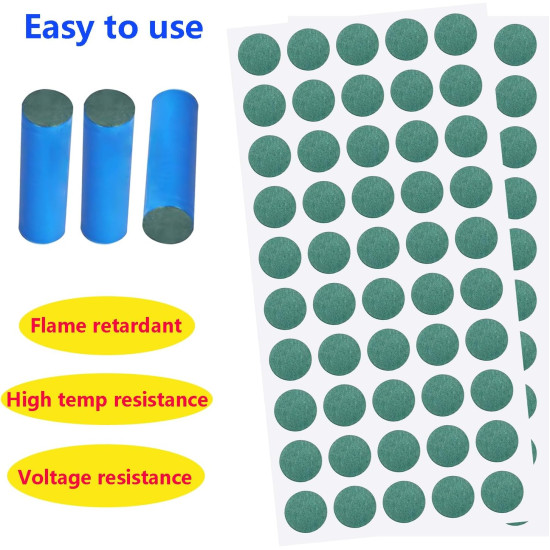
Engineering safety into high-density energy storage systems demands rigorous material characteristics. This solid 18650 insulation gasket exhibits a dielectric breakdown voltage rating exceeding 3500 Volts at standard room temperature, far outperforming the operational voltage thresholds of multi-series lithium-ion battery strings. This high dielectric capability prevents arc-over and corona discharge between adjacent cell terminals and nickel busbars under high-voltage load dynamics.
Thermally, the highland barley paper matrix is rated for continuous operational exposure up to 130 degrees Celsius (Thermal Class B insulation standards), with momentary transient temperature tolerance reaching up to 200 degrees Celsius during high-energy spot welding sequences. The material exhibits low thermal conductivity, serving as an effective thermal buffer that impedes local heat transfer from nickel strip weld points down into the sensitive top crimp seal and safety vent membrane of the 18650 cell. Furthermore, the material maintains its structural dimensional stability across severe ambient temperature fluctuations, avoiding shrinkage, cracking, or brittleness in low-temperature environments down to -40 degrees Celsius.
Structural Anatomy and Terminal Short-Circuit Prevention Dynamics
The mechanical architecture of a cylindrical 18650 cell places the entire positive cap assembly within the center of the top face, surrounded directly by a non-conductive crimp seal ring, which is immediately encircled by the rolled lip of the steel outer can, serving as the negative terminal. Because the outer shrink wrap sleeve only extends slightly over the upper rim, mechanical stress, thermal contraction, or vibration can strip back this thin outer layer. Without an auxiliary top gasket, a conductive busbar or nickel strip welded to the positive center pin can easily flex downward and contact the negative outer rim, resulting in a catastrophic short circuit, runaway thermal event, and total module destruction.
Applying this solid adhesive gasket over the positive shoulder provides a thick, 0.3mm physical protective floor. The precise die-cut ring features a centered clearance aperture tailored to expose the positive contact pad while completely shielding the dangerous perimeter lip. The top surface of the gasket remains non-conductive, smooth, and resistant to mechanical puncture from welding electrodes or sharp busbar edges.
Adhesive Engineering and Mechanical Shear Strength
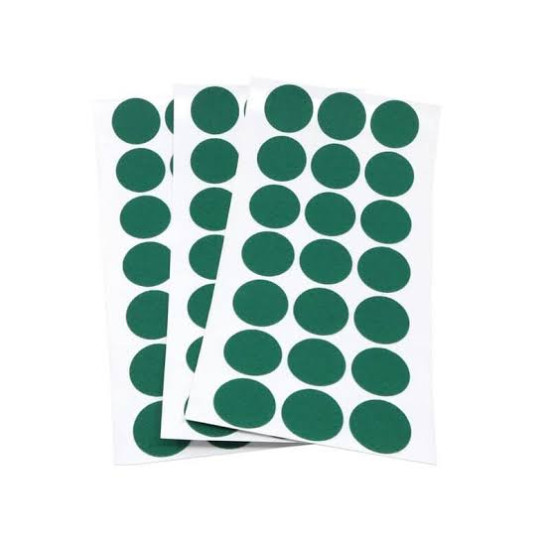
The reverse side of each highland barley paper gasket is coated with a high-performance, pressure-sensitive acrylic adhesive layer (PSA). Formulated specifically for high-bond adhesion to clean metal surfaces, PET shrink films, and nickel plating, this adhesive layer maintains extreme shear strength even under continuous mechanical vibration and thermal cycling. The peel-and-stick backing is protected by an easy-release release paper carrier, allowing rapid deployment during manual prototype fabrication or automated high-speed production line pickup systems.
The acrylic adhesive formulation is chemically inert, non-corrosive to nickel and steel, and engineered to resist off-gassing under vacuum or high-temperature conditions. Once applied with light finger pressure, the adhesive cures to form a permanent physical bond that prevents lateral slippage, moisture ingress, or dust accumulation under the gasket, preserving dielectric performance across years of continuous battery pack service life.
Detailed Application Use-Cases and Terminal Integration Safety
Below are eight detailed engineering application use-cases illustrating how this insulation gasket protects specific terminal pinouts and cell geometries across diverse industries:
1. Cordless High-Torque Power Tool Battery Rebuilds
Power tool battery enclosures endure violent mechanical impacts, severe multi-axis vibration, and intense surge current draw during heavy drilling or cutting operations. In a 5S2P tool battery pack configuration, nickel busbars transmit high current loads directly over the cell top shoulders. Installing these highland barley paper gaskets beneath the main interconnect tabs creates a shock-absorbing dielectric buffer. If the battery pack is dropped, the high-density fiber absorbs the compression force, preventing the sharp edges of the thick nickel busbars from cutting through the outer PVC cell sleeve and shorting the positive tab to the negative cell wall.
2. Light Electric Vehicle (LEV) and E-Bike Traction Packs
High-voltage light electric vehicle batteries, such as 13S4P or 20S6P configurations, operate at elevated system voltages ranging from 48V to 72V nominal. In these long series strings, the potential voltage difference between adjacent nickel series bridges can exceed 60V. Applying these gaskets onto every 18650 cell positive terminal eliminates micro-arcing risks between the series nickel tabs and the negative casing of adjacent parallel groups. The moisture-resistant barrier provided by the barley paper also protects terminal pinouts from electrolytic corrosion caused by ambient humidity and road condensation.
3. Off-Grid Solar Photovoltaic Energy Storage Systems (ESS)
Stationary solar power walls utilize massive 16S20P or larger 18650 cell arrays expected to perform reliably for 10 to 15 years. Over extended operational lifespans, heat generated during continuous charge and discharge cycles causes slow degradation and embrittlement of standard plastic wrappers. By installing Highland Barley Paper gaskets on all cell positive cap junctions during initial pack building, the pack gains a permanent, non-aging inorganic/organic hybrid insulation layer that maintains 3500V electrical isolation long after the underlying PVC shrink wrap has degraded.
4. Multi-Rotor Unmanned Aerial Vehicles (UAV) and Drone Power Modules
Custom high-discharge Li-ion drone battery packs demand minimal weight while operating near maximum continuous discharge rates (high C-ratings). With cell temperatures frequently approaching 70 to 80 degrees Celsius during flight, thermal expansion of the battery cluster exerts immense pressure on internal structural wiring. The 0.3mm ultra-thin profile of these gaskets adds virtually zero weight (0.15 grams per cell) while providing vital heat shielding that prevents positive-to-negative short circuits under intense thermal and high-G flight maneuvers.

5. High-Capacity Stationary Grid Backup and Telecom UPS Modules
Uninterruptible Power Supply (UPS) modules rely on multi-tier battery racks where hundreds of cells are linked in tight physical proximity. During high-current spot welding procedures using dual-point pneumatic welding heads, mechanical pressure on the positive tab can deform the top cap area. The highland barley gasket acts as a mechanical mechanical stop and physical cushion, distributing electrode force evenly across the top rim and protecting the delicate internal PTC (Positive Temperature Coefficient) element and CID (Current Interrupt Device) beneath the cell cap.
6. Heavy-Duty Electric Unicycles (EUC) and Personal Mobility Devices
Personal mobility devices subject internal battery stacks to relentless high-frequency vibration and constant flexing. In custom shaped, curved battery modules fitted around wheel wells, nickel nickel strips are often bent at right angles right over the top cell shoulders. The high dielectric strength and cut-through resistance of the highland barley paper prevent these tightly bent nickel bridges from wearing down through vibration and chafing against the grounded negative outer lip of the cell.


7. Critical Portable Medical Device Battery Enclosures
Medical mobile devices demand zero-fail power systems where short circuits or power interruptions are unacceptable. Integrating these high-tack barley paper gaskets ensures compliance with stringent medical hardware insulation standards (IEC 60601-1 clearance and creepage rules). The adhesive gasket creates a sealed barrier around the positive terminal pinout, preventing airborne liquid ingress, saline splash, or conductive dust from forming a tracking path between the positive button and negative shell.
8. Marine and Rough-Environment Autonomous Power Systems
Subsea drones, oceanographic buoys, and marine monitoring equipment utilize sealed battery enclosures subjected to severe ambient humidity and potential salt fog exposure. The chemical resistance of the vulcanized barley paper ensures that trace moisture mixed with airborne salts will not degrade the physical gasket structure or dissolve the acrylic adhesive layer, maintaining flawless electrical isolation across the positive cap interface under extreme environmental conditions.
Precise Spot Welding Integration and Application Guidelines
Achieving optimal safety and performance requires correct installation procedures during battery module construction:
1. Surface Preparation: Ensure the top surface of the 18650 cell, including the factory PVC sleeve lip and steel cap surface, is thoroughly clean, dry, and free from oil, dust, or electrolyte residue.
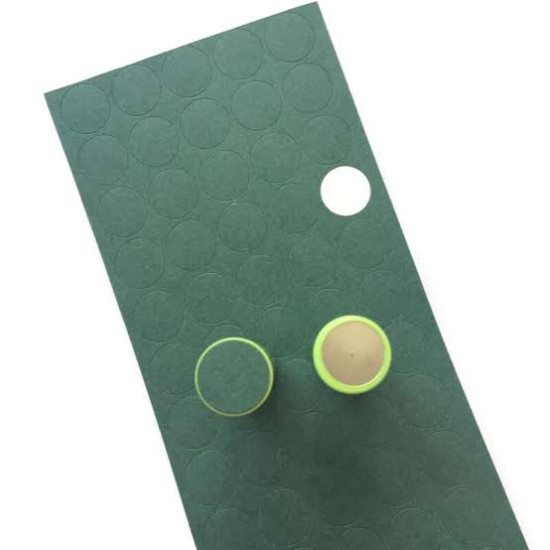
2. Alignment and Application: Peel the individual gasket ring from its release paper matrix. Carefully center the circular opening directly over the elevated positive terminal button of the 18650 cell. Press firmly around the entire ring surface for 2 to 3 seconds to fully activate the pressure-sensitive acrylic adhesive layer.
3. Nickel Strip Layup: Position your custom cut pure nickel or nickel-plated steel strip over the central positive terminal. Ensure that the sides of the nickel strip rest comfortably on top of the highland barley paper gasket surface on either side of the center pin.
4. Spot Welding Execution: Set the spot welder energy parameters (pulse duration and current amplitude) appropriate for the nickel strip thickness (typically 0.12mm to 0.20mm). Apply the welding copper electrodes directly onto the nickel strip positioned over the positive terminal cap. The insulation gasket surrounding the contact zone will safely absorb any minor weld micro-sparks or thermal shock without burning or melting.
Quality Assurance, Environmental Resilience, and Compliance Standards
Every batch of 18650 solid highland barley insulation gaskets undergoes strict dimensional and quality control testing. Cut tolerances are maintained within +/- 0.05mm to ensure perfect concentric alignment with standard 18650 cell dimensions across all major cell manufacturers (PKCell, Sanyo, Panasonic, Samsung, LG, Sony/Murata). The material is fully compliant with RoHS (Restriction of Hazardous Substances) and REACH environmental regulations, containing zero halogenated flame retardants, heavy metals, or toxic chemical binders. Incorporating these premium gaskets into your lithium battery production processes guarantees compliance with international safety protocols including UL 1642, UN 38.3, and IEC 62133 battery safety standards.