- Stock: In Stock
- Model: ESP32-TTGO-SIM800L
- SKU: 4050
LILYGO TTGO T-Call ESP32 SIM800L Wireless Module
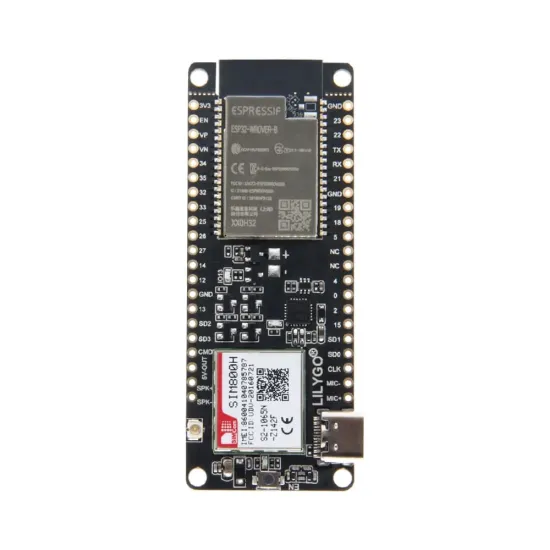
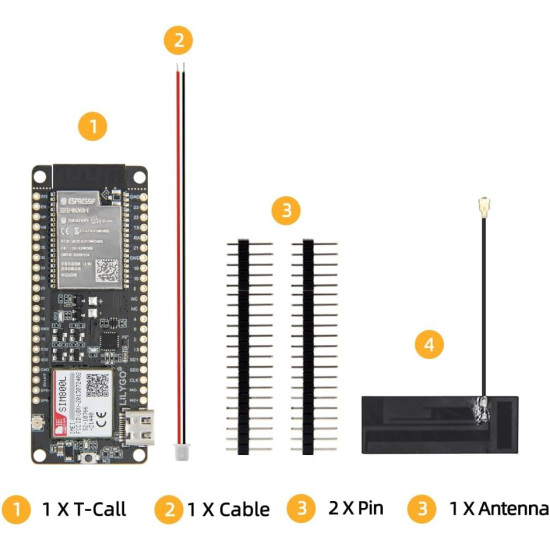
The LILYGO TTGO T-Call is an all-in-one development board that combines the power of the ESP32 microcontroller with an onboard SIM800L GSM/GPRS module. This compact board brings cellular connectivity to your IoT projects, enabling SMS messaging, voice calls, and mobile data transmission over the GSM network without relying on WiFi coverage.
Powerful Dual-Core ESP32 Processor
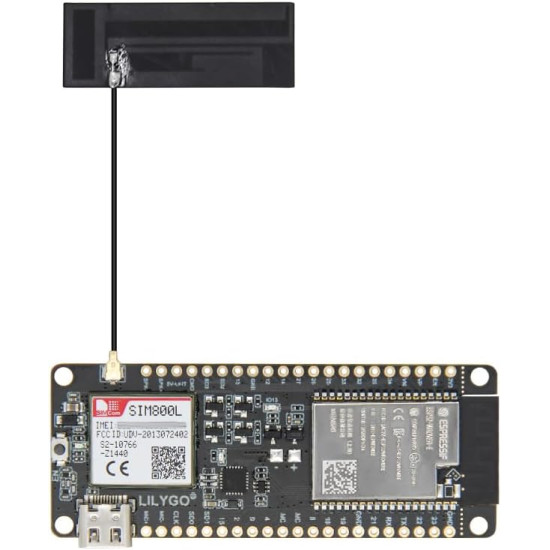
At the heart of the board is the ESP32-WROOM-32 module, featuring a dual-core Xtensa LX6 processor running at up to 240 MHz. With 520 KB of SRAM and 4 MB of flash memory, it delivers ample processing power for demanding applications while supporting built-in WiFi 802.11 b/g/n and Bluetooth 4.2 BLE connectivity.
Integrated SIM800L Cellular Connectivity
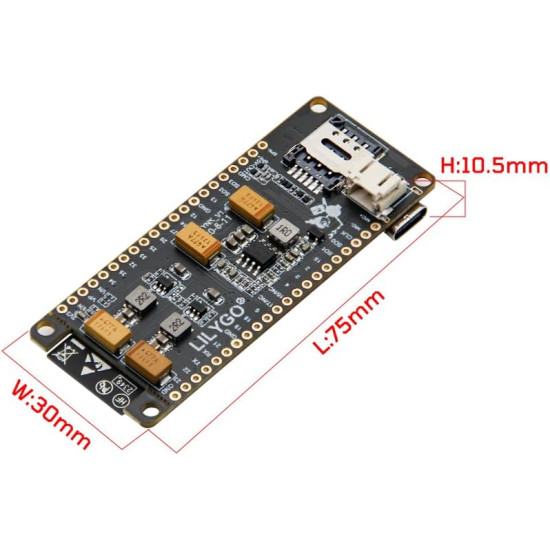
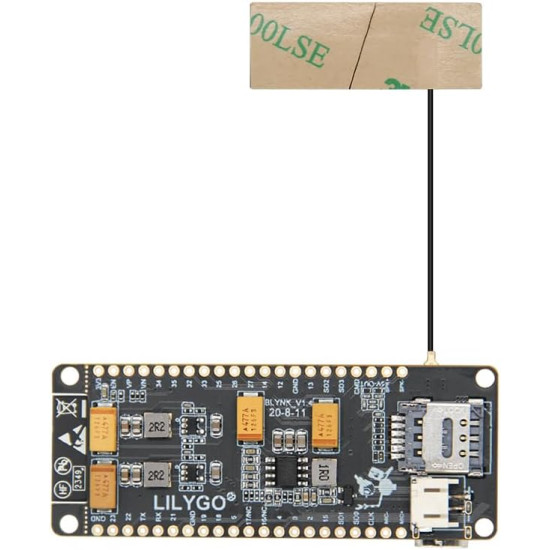
The onboard SIM800L quad-band GSM/GPRS module operates on the 850/900/1800/1900 MHz bands, making it compatible with cellular networks worldwide. A convenient micro SIM card slot on the rear of the board lets you insert any standard 2G SIM card to send and receive SMS messages, make voice calls, and establish GPRS data connections for remote monitoring and control applications.
Battery Support and Charging
The T-Call features a built-in lithium battery charging circuit with a JST PH2.0 connector, allowing portable and standalone operation. Power can also be supplied through the micro USB port, and the integrated voltage regulation ensures stable operation of both the ESP32 and the SIM800L modem.
Easy Programming and Development
Programming the board is straightforward using the Arduino IDE, ESP-IDF, or MicroPython, with full access to the ESP32 GPIO pins broken out along the board edges. The USB-to-serial interface handles code uploads and serial debugging, making development simple for both beginners and experienced makers.
Ideal Applications
This versatile module is perfect for remote environmental monitoring, GPS tracking systems, SMS-based alert and control systems, smart agriculture sensors, home automation, industrial telemetry, and any project requiring cellular communication in locations without WiFi access.