























- Stock: In Stock
- Model: N52 Rectangle Neodymium Magnet
- Weight: 12.00
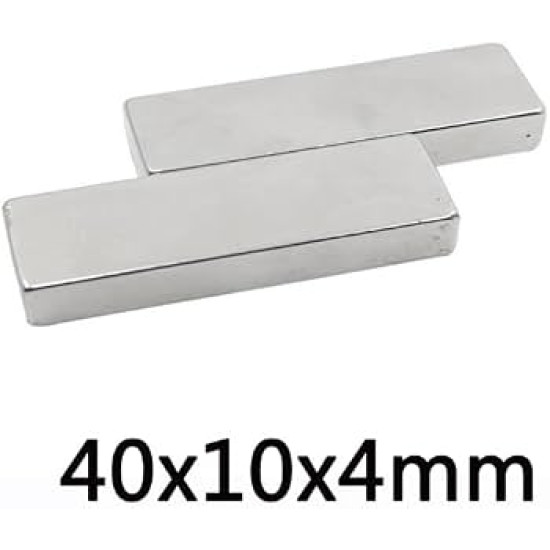
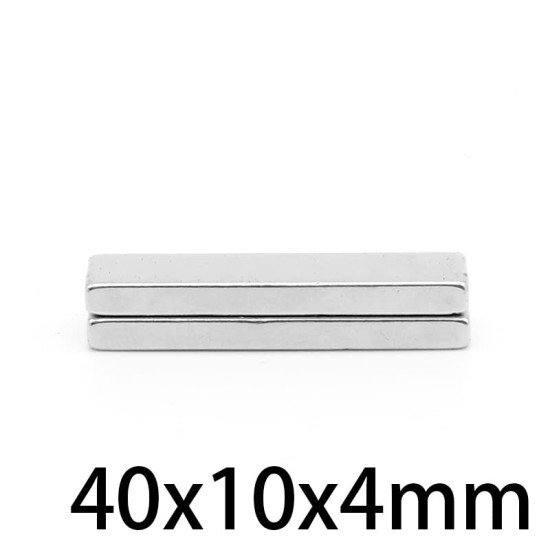
- Dimensions: 40.00 x 10.00 x 4.00
- SKU: 4105
Overview of Sintered N52 Neodymium Magnet Technology
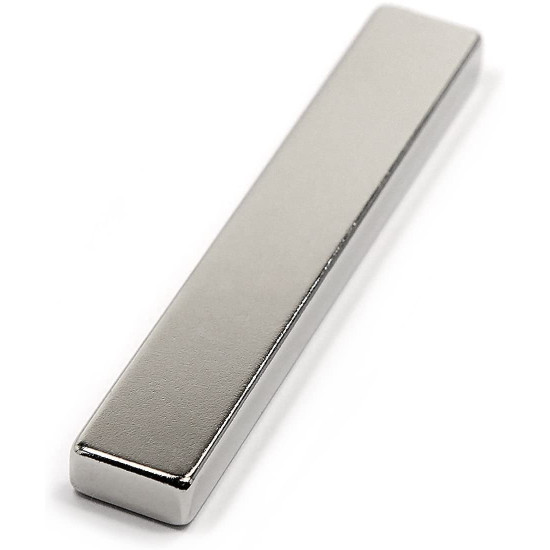
The N52 High Performance Neodymium Rectangular Block Magnet represents the absolute peak of commercially available permanent magnetic energy density. Sintered from a precise metallurgical formulation of neodymium, iron, and boron (Nd2Fe14B), this grade N52 rare-earth magnet delivers exceptional magnetic performance within an extremely compact geometry measuring 40mm in length, 10mm in width, and 4mm in thickness. Grade N52 is currently the highest standard energy grade available in high-volume production, offering significantly higher remnant flux density and holding force compared to lower grades such as N35, N42, or standard ferrite and ceramic alternatives. Designed for advanced industrial automation, high-precision electronic sensing, robotics, aerospace engineering, and custom laboratory apparatuses, this component maximizes magnetic field efficiency while maintaining a thin, low-profile footprint ideal for constrained enclosure volumes.
Material Metallurgy and Structural Composition
Neodymium-Iron-Boron magnets are manufactured via a powder metallurgy process. The raw elements neodymium, iron, and boron are melted in an induction furnace, cast into ingots, and milled into microscopic particles. This fine powder is subsequently aligned in a high-intensity magnetic field while being compressed under high pneumatic pressure into rectangular blocks. The green blocks are then sintered in a vacuum atmosphere at elevated temperatures to achieve dense, solid mechanical structures. Because the resulting polycrystalline alloy is inherently porous and highly susceptible to oxidation, the material is vacuum-annealed and precision-ground to its target spatial dimensions of 40mm by 10mm by 4mm. The atomic crystal structure of Nd2Fe14B exhibits exceptionally high uniaxial magnetocrystalline anisotropy, which gives the material its immense resistance to demagnetization under severe opposing fields.
Magnetic Energy Product and Technical Performance Ratings
This N52 grade rectangular block magnet is characterized by a Maximum Energy Product (BHmax) ranging between 50 and 53 MGOe (Megagauss-Osted), corresponding to approximately 398 to 422 kJ/m3. The residual induction (Br), or remnant flux density, measures between 14.2 and 14.7 KiloGauss (1.42 to 1.47 Tesla). The coercive force (Hcb) is equal to or greater than 10.5 kOe (836 kA/m), while the intrinsic coercivity (Hcj) measures equal to or greater than 12.0 kOe (955 kA/m). On the primary pole faces (40mm x 10mm), the surface field density measured directly at the center via a calibrated Hall effect gaussmeter yields approximately 4100 to 4500 Gauss, depending on the surrounding environmental permeable materials and proximity air gaps. The theoretical vertical direct pull strength against a flat, ground, mild steel plate (10mm thickness) reaches approximately 4.8 to 5.2 kilograms under ideal test conditions, whereas shear holding force in lateral sliding applications typically measures 20 percent to 25 percent of the direct pull force due to frictional coefficients.
Geometrical Dimensions, Mechanical Tolerances, and Magnetization Axis
The structural geometry of this component features a length of 40.0mm (tolerance +/- 0.1mm), a width of 10.0mm (tolerance +/- 0.1mm), and a thickness of 4.0mm (tolerance +/- 0.05mm). The magnet is oriented with isotropic axial alignment through the thickness dimension. This means the magnetic vector runs perpendicularly through the 4mm thickness, placing the primary North and South pole boundaries on the opposing large 40mm x 10mm planar surfaces. This orientation maximizes the broad spatial projection of the magnetic flux lines across the surface area, facilitating wide field interactions in planar sensors, motor arrays, and linear holding structures.
Plating, Surface Corrosion Protection, and Environmental Resistance
Unprotected NdFeB alloys react readily with atmospheric oxygen and ambient humidity, causing rapid corrosion and structural degradation into iron oxide powder. To prevent oxidation and maintain physical integrity, this magnet is sealed with an industrial Ni-Cu-Ni (Nickel-Copper-Nickel) triple-layer electroplated coating. The primary nickel layer provides superior mechanical adhesion to the sintered substrate, the intermediate copper layer acts as a non-porous moisture barrier and flexible stress absorber, and the outer nickel layer offers a polished, bright metallic finish with enhanced wear resistance. The total coating thickness ranges between 15 and 25 micrometers. This surface finish withstands up to 24 hours of continuous neutral salt spray (NSS) testing, making it suitable for standard indoor electronics, industrial enclosures, and dry automation setups. For underwater, highly acidic, or marine applications, additional conformal coatings such as parylene, epoxy, or complete stainless steel hermetic encapsulation should be implemented.
Thermal Dynamics, Temperature Coefficients, and Demagnetization Limits
Standard N52 grade neodymium magnets are optimized for ambient to moderate operating temperatures. The maximum recommended continuous operating temperature for this N52 block magnet is 80 degrees Celsius (176 degrees Fahrenheit). Beyond 80 degrees Celsius, the magnet experiences reversible magnetic losses calculated via temperature coefficients. The reversible temperature coefficient of remnant flux density (alpha Br) is approximately -0.12 percent per degree Celsius, while the reversible temperature coefficient of intrinsic coercivity (beta Hcj) is approximately -0.60 percent per degree Celsius. If the component is exposed to temperatures exceeding its Curie point of approximately 310 degrees Celsius, the domain structures scramble completely, resulting in irreversible structural demagnetization that cannot be recovered without industrial re-magnetization in a high-intensity multi-Tesla impulse coil.
1: Precision Hall-Effect Position and Proximity Sensing
In electronic control units and linear displacement systems, this 40mm x 10mm x 4mm N52 block serves as an ideal magnetic target for linear and digital Hall-effect sensor ICs (such as A1302 or SS49E). When mounted to a sliding mechanical carriage, the magnet moves parallel or perpendicular to the Hall sensor element. Due to the high surface flux density of 4200 Gauss, the sensor detects minute positional changes over extended air gaps up to 15mm. Designers can implement threshold triggering routines, absolute position tracking, and non-contact limit switching in harsh environments where optical or mechanical microswitches would fail due to dust, oil, or mechanical wear.
2: Industrial Reed Switch Triggering and Fluid Level Detection
When integrated into liquid level sensing mechanisms or security door contacts, the intense magnetic field of this N52 block activates hermetically sealed magnetic reed switches across wide mechanical tolerances. The 40mm length allows for extended actuation zones, keeping the reed switch contacts closed across a wide range of motion. In fluid tanks, a float containing this magnet glides along a non-magnetic guide tube containing reed switches wired to digital microcontrollers (e.g., STM32, Arduino, or PLC input modules). The strong magnetic flux reliably penetrates stainless steel or brass tube walls up to 3mm thick without requiring physical contact.
3: High-Torque Miniature Brushless DC (BLDC) Motor Assemblies
In custom electric propulsion, drone actuators, and high-RPM coreless BLDC motors, this block magnet serves as a rotor pole element. The 40mm length provides a long effective magnetic interaction zone along the motor armature length, maximizing electromagnetic torque output per ampere (Kt). When arranged in alternating North-South Halbach array configurations or standard surface-mounted rotor slots, the N52 material creates intense flux density across the motor air gap, interacting with the copper stator windings to generate smooth rotational torque, reduced cogging, and superior mechanical power density.
4: Voice Coil Actuator Systems for Acoustic Transducers
High-fidelity acoustic drivers, haptic feedback actuators, and precision voice coil motors rely on concentrated magnetic fields in narrow linear air gaps. Positioning two 40x10x4mm N52 block magnets with opposing poles facing a low-carbon steel pole piece concentrates magnetic flux lines within a 1mm to 2mm gap. When an electrical signal passes through a lightweight copper or aluminum voice coil situated in this magnetic field, the Lorentz force drives rapid linear displacement. The high energy density of N52 material increases driver sensitivity, transient response time, and overall dynamic acoustic SPL output.
5: Bistable Magnetic Latching Relays and Power-Efficient Solenoids
In energy-critical applications like smart utility meters and pulse-actuated valves, bistable magnetic latching relays use permanent magnets to hold mechanical contacts in an open or closed state without continuous electrical power consumption. This 40mm x 10mm x 4mm block provides the static bias holding force necessary to retain heavy electrical contact bridges or mechanical plungers against spring tension. A brief, low-energy current pulse through an adjacent electromagnetic coil neutralizes the local permanent magnetic field, allowing the relay mechanism to switch states instantly with zero static power dissipation.
6: Precision Linear Optical Stage and Mirror Alignment
Optomechanical stages, laser path steering mounts, and automated microscope slides require sub-micron positioning resolution without mechanical backlash. By embedding this N52 neodymium block into a moving stage platform opposite a stationary voice coil or planar PCB trace coil, engineers construct direct-drive linear Lorentz force positioners. The uniform 40mm flux field allows smooth, hysteresis-free linear displacement over a multi-millimeter stroke length when controlled by closed-loop optical encoder feedback and precise current-driver circuitry.
7: High-Gradient Microfluidic Magnetic Bead Separation
In molecular biology, clinical diagnostics, and laboratory automation, magnetic bead isolation is used to extract DNA, RNA, proteins, and cell populations from liquid samples. Placing this N52 rectangular magnet adjacent to microfluidic channels or multi-well plates generates a steep magnetic field gradient along the 4mm thickness edge. Functionalized superparamagnetic iron oxide nanoparticles (SPIONs) suspended in the fluid medium are rapidly pulled toward the channel wall nearest the magnet face within seconds, separating bound biological targets from the supernatant liquid efficiently.
8: Modular Industrial Fixturing and Precision Tooling Interfaces
For automated robotic end-effectors, quick-change CNC tooling plates, and magnetic workholding jigs, this block magnet provides reliable magnetic retention without requiring pneumatic lines or electrical wiring. By embedding multiple 40x10x4mm blocks into aluminum or non-magnetic 304 stainless steel baseplates opposite ferrous targets, custom holding fixtures deliver high clamp forces up to 5kg per magnet block. Incorporating a mechanical cam lever or push-off pin breaks the magnetic circuit manually, releasing held workpieces or robotic tooling modules safely and predictably.
Mechanical Handling, Breakage Risks, and Assembly Safety Instructions
Sintered neodymium magnets are mechanically brittle and structurally similar to ceramic materials. Despite being coated in nickel, the underlying metal matrix cannot withstand sharp impacts, high shear bending loads, or direct hammer blows. If two N52 magnets are allowed to snap together uncontrolled from a distance, the impact velocity generates localized pressure points exceeding the ultimate tensile strength of the material, causing violent shattering, chipping, or flying metal shrapnel. Personnel must wear safety glasses and protective gloves when handling these components. When assembling this magnet into steel pockets or adhesive channels, use non-magnetic brass or plastic tweezers, wedge-style sliding placement techniques, and high-shear structural adhesives such as two-part epoxy or cyanoacrylate engineered for metal bonding.
Storage, Magnetic Field Attenuation, and Packaging Protocols
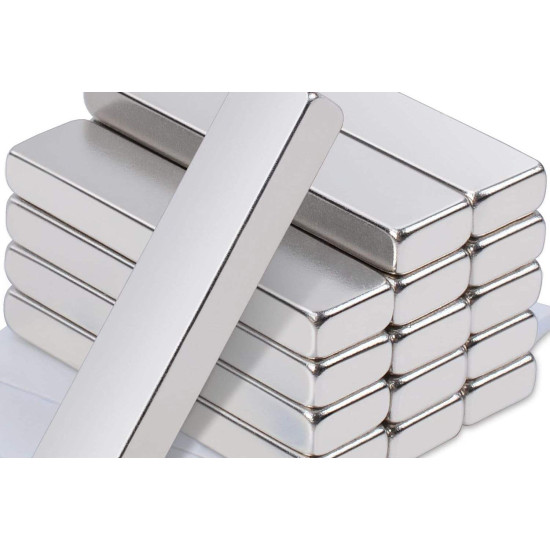
To preserve magnetic properties and prevent unwanted magnetic interference with sensitive laboratory instruments, electronic storage media, or cardiac pacemakers, N52 magnets must be stored in temperature-controlled, dry environments. When transporting or storing multiple units, non-magnetic plastic separators or wooden spacers should be placed between individual magnets to allow easy separation. For air freight shipping, strict IATA magnetic field regulations require shielding using high-permeability soft iron sheets or mu-metal line boxes to keep stray magnetic field emissions below 0.00525 Gauss at a distance of 4.6 meters, preventing interference with aircraft navigation systems.