Menu
Your Cart
NOTICE: We have Fully discontinued physical walk-in customer service, RFQ, and LPO processing. Nerokas is now a FULLY DIGITAL ONLINE STORE, and our virtual assistant, Ginō AI, is here to help you navigate and checkout. Just ADD your Items to cart and type CHECKOUT on Ginō. Please note that corporate customers must register a corporate account to ensure proper Digital eTIMS/VAT processing.

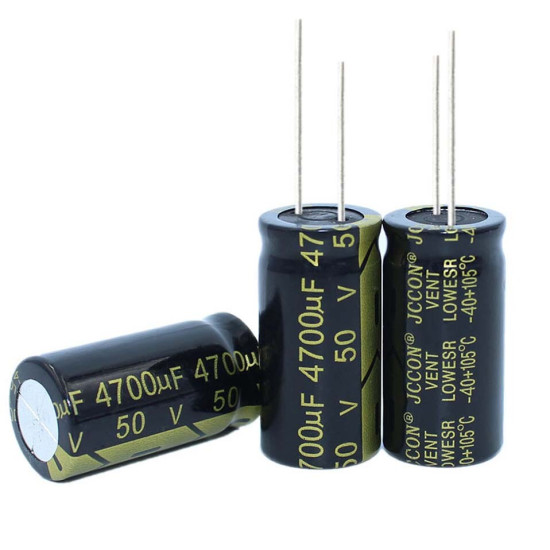
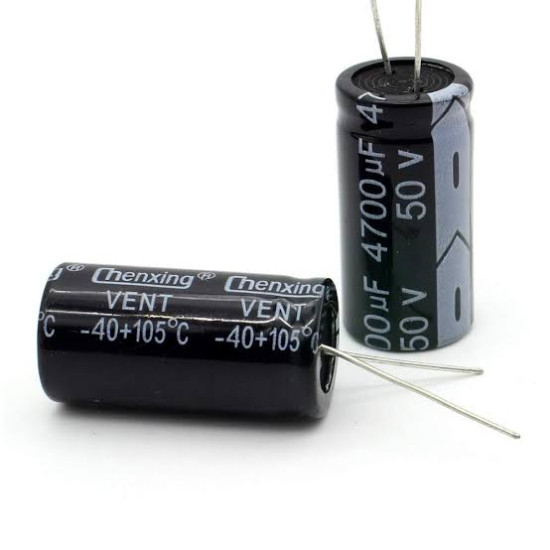
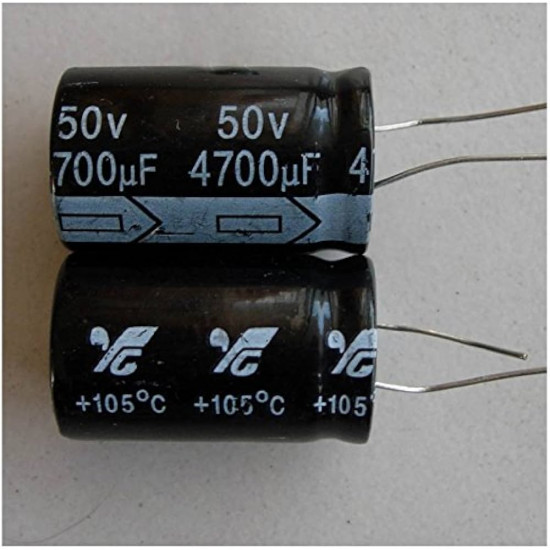
4700uF 50V Radial Aluminum Electrolytic Capacitor

4700uF 50V Radial Aluminum Electrolytic Capacitor
New
4700uF 50V Radial Aluminum Electrolytic Capacitor
KES 200.00
  • Stock: In Stock
  • Model: 4700uF 50V Radial Aluminum Ele
  • Weight: 16.50
  • Dimensions: 18.00 x 18.00 x 35.50
  • SKU: 550

Comprehensive Product Overview

The 4700uF 50V Radial Aluminum Electrolytic Capacitor is an industrial-grade passive component specifically engineered to meet the stringent demands of modern power conversion, high-fidelity audio reproduction, and heavy-duty industrial automation. Operating as a critical bulk energy storage and ripple attenuation device, this component provides an exceptional capacitance-to-volume ratio within a compact cylindrical footprint. Built using high-purity aluminum foils and advanced electrolyte chemistry, it delivers superior electrostatic stability, exceptionally low internal loss characteristics, and sustained reliability under intense thermal and electrical stresses. Whether integrated into primary AC-DC rectification stages or utilized as an intermediate DC-link stabilization reservoir, this component effectively absorbs rapid transient spikes, mitigates rail sag, and sustains system performance under dynamic load fluctuations.

Dielectric Architecture and Advanced Physical Construction

The internal architecture of this radial electrolytic capacitor relies on precision-etched high-purity aluminum foil, which undergoes an electrochemical forming process to cultivate a uniform, microscopic dielectric layer of aluminum oxide (Al2O3). This microscopic dielectric barrier features an exceptionally high breakdown field strength, enabling the capacitor to sustain a continuous 50V DC operating voltage with a robust transient surge overhead. The cathode foil is interleaved with high-absorption separator paper saturated in a specialized conductive liquid electrolyte that provides self-healing characteristics: if localized microscopic dielectric breakdown occurs, the electrochemical action of the electrolyte regenerates the insulating oxide layer instantly.

The winding assembly is hermetically sealed within an impact-extruded aluminum canister utilizing a high-grade synthetic rubber bung. This seal prevents electrolyte evaporation throughout the lifecycle of the component and protects the internal core against ambient moisture ingress. Engineered onto the top crown of the aluminum can is a cross-patterned safety pressure vent. In the rare event of extreme overvoltage, reverse polarity installation, or catastrophic thermal runaway, the safety vent is engineered to rupture predictably, venting internal gas safely downward and preventing violent structural case rupture.

Rigorous Electrical Dynamics: ESR, Ripple Current, and Impedance

A fundamental parameter in high-performance circuit topologies is Equivalent Series Resistance (ESR). This 4700uF capacitor is formulated with a low-viscosity, low-resistivity electrolytic formulation that curtails internal ESR across a broad spectrum of switching and line frequencies. Low ESR directly translates to reduced I-squared-R thermal losses during high AC ripple current conduction, suppressing internal core temperature rise and dramatically extending operating life. The component exhibits robust ripple current capability, allowing it to easily handle alternating currents superimposed on the direct current bias without experiencing premature dielectric fatigue.

Furthermore, the physical winding configuration minimizes Equivalent Series Inductance (ESL). While large can-size radial electrolytic capacitors are predominantly optimized for low-to-mid frequency smoothing (from 50Hz mains rectification harmonics up to several tens of kilohertz), its low impedance profile ensures rapid delivery of stored coulombs during rapid current draw events. This low-impedance dynamic performance makes the component an outstanding bulk decoupling reservoir across dynamic switching regulators, high-current transconductance audio amplifiers, and H-bridge motor drives.

Thermal Resilience and Service Life Longevity

Engineered to operate reliably across an extended temperature range spanning from -40 degrees Celsius to +105 degrees Celsius, this capacitor significantly outperforms standard 85-degree consumer-grade alternatives. The specialized electrolyte chemistry maintains high ionic mobility at sub-zero temperatures, preventing the sharp capacitance drop-offs and steep ESR spikes typical of lower-grade formulations. At the higher end of the thermal spectrum, the component is rated for long endurance running at maximum operating temperature under full rated DC voltage.

Operational lifetime follows the established Arrhenius thermodynamic model, where every 10-degree Celsius decrease in continuous core operating temperature approximately doubles the projected operational lifespan of the component. Operating this 105-degree rated capacitor within typical ambient industrial environments (40 to 60 degrees Celsius) yields an exceptionally long service life that often exceeds 50,000 to 100,000 operational hours. This thermal resilience makes it an exceptional choice for unventilated enclosures, automotive engine bay peripheries, and densely packed power supplies.

Pinout, Mechanical Polarity Identification, and Installation Guidelines

Radial aluminum electrolytic capacitors are inherently polarized components, requiring strict adherence to voltage orientation during circuit design and assembly. Failure to maintain correct polarity can lead to rapid dielectric degradation, excessive leakage current, extreme thermal build-up, and eventual activation of the pressure release vent. The physical leads and sleeve markings provide clear, unambiguous polarity identification:

Anode (Positive Lead, +): In factory-fresh, un-trimmed condition, the positive lead is visibly longer than the negative lead. It connects directly to the internally formed dielectric anode foil. This terminal must be connected to the positive electrical potential.

Cathode (Negative Lead, -): The negative lead is distinctly shorter. In addition to the lead length discrepancy, the outer insulating PVC or PET sleeve features a highly visible, continuous vertical stripe printed with minus signs (-) aligned directly over the negative terminal side. The negative lead must connect to ground or the lowest relative electrical potential.

The component features a standardized radial lead spacing (lead pitch) of 10.0mm with tinned copper-clad steel leads that guarantee superior solderability across automated wave soldering and manual soldering irons. During printed circuit board layout, designers should avoid routing high-current, high-temperature traces directly under the rubber seal of the capacitor and should leave a minimum of 3mm of vertical clearance above the safety vent to ensure unobstructed expansion if venting occurs.

High-Performance Application Use-Cases

1. Linear DC Power Supply Bulk Rectifier Filtering: Positioned directly following a full-wave bridge rectifier, this 4700uF capacitor serves as the primary reservoir filter. It bridges the inter-cycle voltage troughs of 50Hz and 60Hz rectified AC, smoothing the waveform into a steady, low-ripple DC intermediate rail ready for linear pass transistors or low-dropout regulators.

2. Switched-Mode Power Supply (SMPS) Post-Rectification Output Stage: In medium-voltage SMPS circuits, this unit acts as a secondary-side filter element. By suppressing low-frequency ripple caused by sudden load steps and filtering line-frequency modulation, it maintains tightly regulated 24V, 36V, or 48V output rails under full rated secondary load currents.

3. High-Fidelity Audio Amplifier Rail Stiffening: Used in high-power Class AB and Class D audio power stages, split-rail power supplies require immense instantaneous current delivery to reproduce powerful low-frequency bass transients. Installing these 4700uF 50V capacitors symmetrically across the positive and negative rails provides localized energy reservoirs, preventing supply rail sag, improving bass tightness, and suppressing audible 100Hz/120Hz mains hum.

4. Brushless DC (BLDC) and Stepper Motor Controller Inverter Bus Decoupling: In robotic drives, CNC controllers, and electric mobility systems, high-frequency PWM switching of MOSFETs or IGBTs introduces severe inductive voltage spikes and regenerative back-EMF into the DC bus. This capacitor absorbs regenerative inductive energy, mitigates rail bounce, and preserves driver gate integrity.

5. Industrial Automation PLC 24V/48V Bus Hold-Up Systems: Programmable Logic Controllers (PLCs) and industrial fieldbus nodes require continuous operational power during brief AC mains dropouts or brownout transients. Placed across the 24V or 48V DC bus, this high-capacity unit provides essential hold-up energy, enabling the system to complete critical machine operations and save non-volatile memory states before shutting down.

6. Solar Inverter and Maximum Power Point Tracking (MPPT) Buffering: In decentralized solar energy micro-inverters and charge controllers, fluctuating solar irradiation creates input current variations. This 50V capacitor acts as an input decoupling buffer, stabilizing the DC panel output voltage so the MPPT algorithm can reliably track the maximum power curve without hunting or oscillations.

7. Automotive Aftermarket Audio and Power Conditioning: Automotive 12V to 24V electrical architectures are notorious for electrical noise generated by alternators, ignition coils, and auxiliary motors. Rated at 50V, this component offers immense voltage margin to withstand ISO 7637-2 load dump transients and electrical spikes while smoothing DC lines feeding premium aftermarket DSPs, amplifiers, and communications gear.

8. Uninterruptible Power Supply (UPS) Intermediate Filter Circuits: Inside uninterruptible power systems, instantaneous transition between grid AC power, intermediate battery backup, and inverter driving circuitry demands seamless charge transfer. This capacitor provides the necessary intermediate rail decoupling, damping resonant oscillations across inductive transformer primary windings and stabilizing switching transitions.

Safety Handling, Precautions, and Failure Modes

Engineers must ensure the combined DC bias voltage and peak AC ripple voltage never exceed the 50V maximum working voltage limit under steady-state or worst-case transient conditions. Operating the capacitor near its breakdown voltage accelerates dielectric aging and increases internal leakage current. Always design circuits with an adequate voltage derating factor (typically 20 percent to 30 percent for maximum reliability). Additionally, when servicing or testing power stages containing 4700uF capacitors, always discharge the stored energy through an appropriate high-wattage bleed resistor prior to handling to prevent electrical shock or equipment damage from high-energy discharge sparks.

Ginō Ginō AI - Nerokas AI Assistant
✕
Jambo! I am Ginō, a Nerokas AI Assistant and Africa's best Open Hardware Facilitator AI agent here to help. In order to serve you better and to help me give you accurate shipping estimates as we begin, could you please tell me your name and your location/city?

You can also ask about any hardware or type I'd like to order, I am looking for..., you can also LIST all SKUs & Quantity of desired items from our website here for me to help you Checkout automatically at anytime to fast-track your requests and orders.